Collage of Beadworks by Modern Métis Designs

Modern Métis Designs

Handmade Métis jewelry(earrings, keychains, brooches, hair pieces) with modern designs(inspired by shows/movies/games/poo culture)

Beaded earrings by Sweetgrass Crafts

Sweetgrass Crafts

Indigenous beadwork with a modern twist. Crafting culture, one bead at a time.

Beaded earrings by Midnight Sun Elegance.

Midnight Sun Elegance

Midnight Sun Elegance is authentic Indigenous Jewellery and accessories with a modern flare.

English
Body
Margaret Atwood

The Canadian literary legend on how her 1985 dystopian thriller was brought to life on stage.

The San Franciso Opera's General Director Matthew Shilvock conducted a written interview with author Margaret Atwood on the opera adaption of The Handmaid's Tale. The full interview is shared here with their permission.

MATTHEW SHILVOCK: As author of some of the most iconic, thoughtfully constructed works of literature, what has it felt like to experience your work taking on its own life, being adapted by others for stage or screen?

MARGARET ATWOOD: I’ve done adaptations myself, so know some of the pitfalls. I’ve had some adaptations that didn’t catch fire – we won’t mention those – and some that have really been well-done, exciting, and impactful. It’s partly luck – adaptations are made by teams, not individuals, and if the team is good, the adaptation has a chance. But films, television series, ballets, and operas are their own art forms and have to succeed on those terms. You can’t expect them to be novels, which are made entirely of words.

SHILVOCK: How readily did you agree to give the rights for an operatic Handmaid’s Tale?

ATWOOD: I was in Copenhagen doing book promo, and the tall Danish composer, Poul Ruders, went down on his knees to me on the bright red carpet of the Hotel d’Angleterre. He said, “I’ve been given a commission by the Royal Danish Opera Company – the first one they’ve given in 34 years. I have to do The Handmaid’s Tale! I must do The Handmaid’s Tale!  If I can’t do The Handmaid’s Tale, I don’t want to do any opera at all!”  I thought, “Either this man is a lunatic and the opera will be bad and will disappear, or he is a visionary and a genius, and it will be good. What’s to lose? Roll the dice!”  And so I did.

SHILVOCK: What do you feel the art-form of opera has uniquely brought to this story?  

ATWOOD: Opera – I include its children, operetta and musical comedy – is the only art form that’s musical, visual, and dramatic all at the same time. It was the cinema of its day, and attracted audiences both high-society and low. Composers in the 19th century churned out operas like B movies, and they could cause riots. Many think of opera now as rather staid, but that is not its origin. It delights me that The Handmaid’s Tale opera has brought back some of that boundary-pushing. It’s the only opera in which you will hear a beautiful yearning aria on the subject of the menstrual cycle, just for instance.

SHILVOCK: In the book, you quote Amazing Grace as part of Offred’s inner dialogue, as she reflects on this now-outlawed music that she can only sing in her head. Poul Ruders incorporates Amazing Grace evocatively into the opera as a tune that speaks both for a lost world, and also organized religion – a lyrical foil against the acerbic chill of Gilead. How do you imagine Gilead in terms of music? Is it a very quiet place, or are there pockets of music making still happening?

ATWOOD: Well, let us consider Amazing Grace and why it is outlawed in Gilead. It was written by a former slave-trader who became an abolitionist, and it sings about being lost and then found, and being saved, and having fear relieved. So, like the Bible itself – censored and re-written in Gilead – it can be read either as a symbol of “organized religion” or a disrupter of the kind of religion we see in Gilead. Christianity has always had a radical side to it. The workers’ movements of the 30s were often led by preachers. And need we mention Martin Luther King?

As for Gilead, like all totalitarianisms it censors, but uses, music – particularly on its state-controlled TV religious programs.

SHILVOCK: Do you think that The Testaments would lend itself to an operatic treatment?  

ATWOOD: Of course. It has a conflicted and secretive central character (mezzo) who has had a change of heart and is constantly in danger, plus three young women in peril (two sopranos and an alto), a villain (or two) (baritone?), and the possibilities for a full chorus. What’s not to like?

I am a big fan of Dialogues of the Carmelites – just to give an example of how this kind of material – inner religious dialogue in an atmosphere of danger and violence – can be handled.

Page Summary
The Canadian literary legend on how her 1985 dystopian thriller was brought to life on stage.
Feature Image
Margaret Atwood
Hide Sidebar
Off
Completed works by Lisa L'Hirondelle

Lisa L'Hirondelle

Handmade beaded jewellery, resin art, apparel, ribbon skirts, laser products.

Artist, Chanel, with an 8 inch dream catcher

Wildbird Designs

Wildbird Designs creates unique dream catchers and pyrography art.

Attaching clothes on a line as a soft breeze drifts by - quiet labour meets grace in a moment of shared rhythm and wind.

Laird Goulet Art

Distinctive, emotionally resonant Art and design pieces - offered as premium prints, apparel, and décor for discerning collectors and buyers.

Submitted by Carla Snow via… on
Page Summary
Concert schedule for the 15th BISQC where 10 emerging string quartets will compete
Dates
-
Feature Image
Isidore String Quartet at BISQC 2022
Events
BISQC Concert 1: 21st Century Haydn Round
BISQC Concert 2: 21st Century Haydn Round
BISQC Concert 3: 21st Century Haydn Round
BISQC Concert 4: 21st Century Haydn Round
BISQC Concert 5: 21st Century Haydn Round
BISQC Concert 6: Romantic Round
BISQC Concert 7: Romantic Round
BISQC Concert 8: Romantic Round
BISQC Alumni Concert
BISQC Concert 10: Kati Agócs World Premiere Round
BISQC Concert 11: Beethoven/Schubert + 20th Century
BISQC Concert 12: Beethoven/Schubert + 20th Century
BISQC Concert 13: Beethoven/Schubert + 20th Century
BISQC Concert 14: Finals
Description


Banff International String Quartet Competition presents the 2022 winners, Isidore String Quartet and other alumni of the competition.  
 

Isidore String Quartet
Barry Shiffman, violin
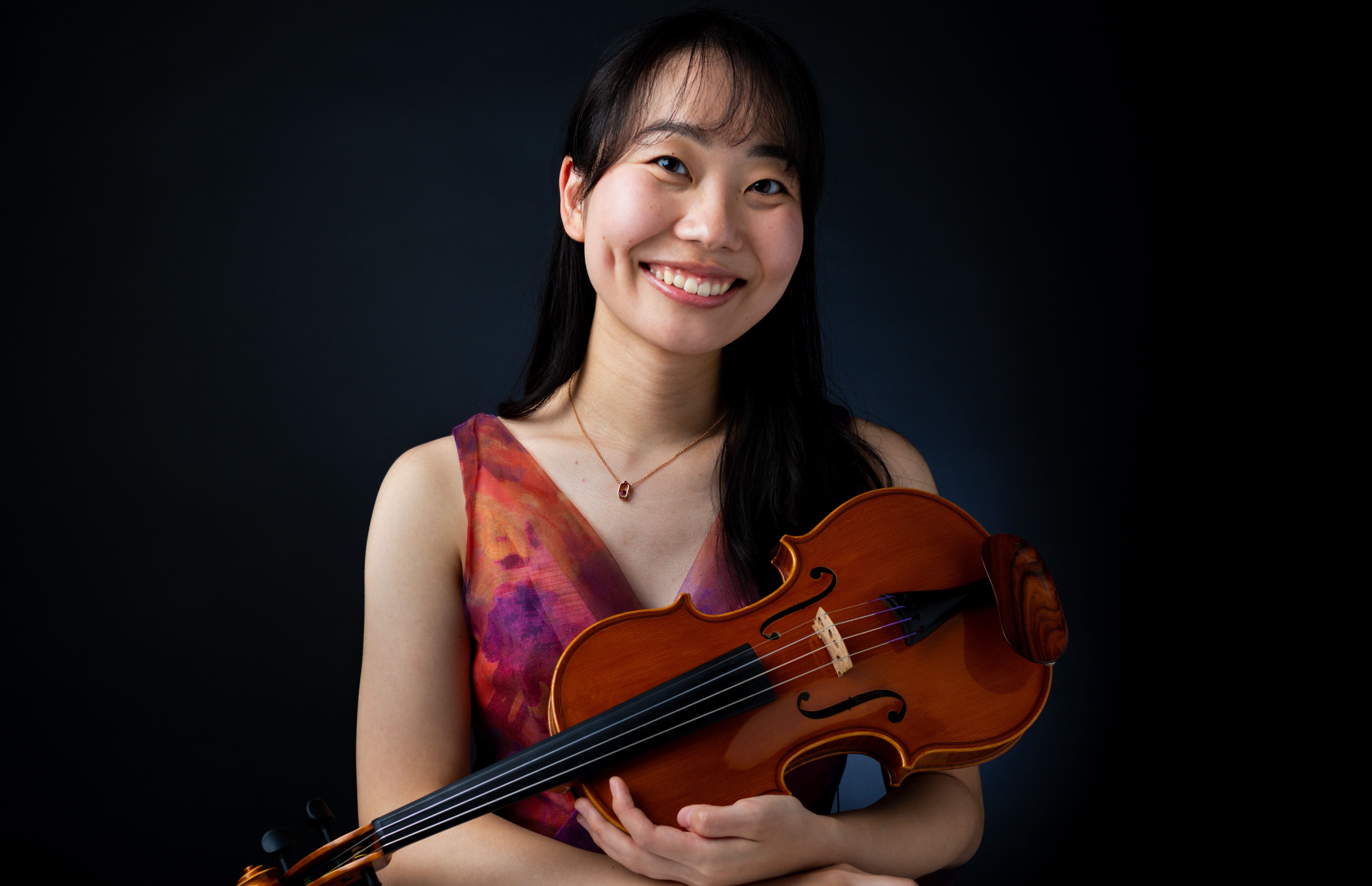
Yoanna Haeun Jang, violin
Harrison Meng, viola
David Ying, cello
Joel Quarrington, bass

Osvaldo Golijov: Last Round


Barry Shiffman, viola
Isidore String Quartet

Osvaldo Golijov: K’vakarat


Isidore String Quartet
Milena Pajaro-van de Stadt, viola
David Ying, cello

Johannes Brahms: 
String Sextet No.1 in B-flat Major, Op. 18
     Allegro ma non troppo
     Andante, ma moderato
     Scherzo: Allegro molto
     Rondo: Poco allegretto e grazioso

Isidore String Quartet, photo by Jiyang Chen
Page Summary
Presenting the 2022 BISQC winners, Isidore String Quartet and other alumni of the competition.
Exhibition
No
Free
No
Donation
Off
Banff Centre Artist/Practicum/Staff Only
Off
Licensed
Off
Age Restrictions
This concert is suitable for ages 14 and older.
Department
Performance Date
Date
Audience View Micro Site URL
https://tickets.banffcentre.ca/Online/mapSelect.asp?BOset::WSmap::seatmap::performance_ids=0B04602A-E49E-4AFF-8CBA-0AAB16016A9E
Expandable Content
The Performers

Isidore String Quartet

Isidore_String_Quartet.jpg

Adrian Steele and Phoenix Avalon, violins
Devin Moore, viola 
Joshua McClendon, cello

"A polished sonority and well-balanced, tightly synchronized ensemble with nearly faultless intonation....it is heartening to know that chamber music is in good hands with such gifted young ensembles as the Isidore Quartet"
—Chicago Classical Review

Winners of a 2023 Avery Fisher Career Grant, and the 14th Banff International String Quartet Competition in 2022, the New York City-based Isidore String Quartet was formed in 2019 with a vision to revisit, rediscover, and reinvigorate the repertory.  The quartet is heavily influenced by the Juilliard String Quartet and the idea of ‘approaching the established as if it were brand new, and the new as if it were firmly established.’

The quartet began as an ensemble at the Juilliard School, and has coached with Joel Krosnick, Joseph Lin, Astrid Schween, Laurie Smukler, Joseph Kalichstein, Roger Tapping, Misha Amory, and numerous others. They are currently completing their final year as Peak Fellowship Ensemble-in-Residence at Southern Methodist University in Dallas.

In North America, the Isidore Quartet has appeared on major series in Boston, New York, Berkeley, Chicago, Ann Arbor, Pittsburgh, Seattle, Durham, Washington DC, Houston, Toronto, and Montreal, and has collaborated with several eminent performers including James Ehnes, Jeremy Denk, Shai Wosner, and Jon Nakamatsu.  Their 24/25 season includes performances in Salt Lake City, Buffalo, Kansas City, Portland (OR), Louisville, New Orleans, Cincinnati, Memphis, Vancouver, San Francisco, and many other cities across the U.S. and Canada.  In Europe they will appear at Amsterdam’s Concertgebouw, and in Bonn (Beethoven Haus), Stuttgart, Cologne, and Dresden, among many others.

Over the past several years, the quartet has developed a strong connection to the works of composer and pianist Billy Childs. His String Quartet No. 2, “Awakenings” was among the repertoire that delivered the Isidore their Banff victory, and this season they will play Childs’ Quartet No. 3, “Unrequited.” In the 2025-26 season, they will premiere a new Childs quartet written expressly for them.

Both on stage and outside the concert hall, the Isidore Quartet is deeply invested in connecting with youth and elderly populations, and with marginalized communities who otherwise have limited access to high-quality live music performance.  They approach music as a “playground” and attempt to break down barriers to encourage collaboration and creativity.  The name Isidore recognizes the ensemble’s musical connection to the Juilliard Quartet:  one of that group’s early members was legendary violinist Isidore Cohen.  Additionally, it acknowledges a shared affection for a certain libation - legend has it a Greek monk named Isidore concocted the first genuine vodka recipe for the Grand Duchy of Moscow!

Yoanna Haeun Jang

Yoanna Jang_Credit Stuart Lowe.JPG

Yoanna Haeun Jang is an 18-year-old Canadian violinist, studying with Barry Shiffman, and Neuroscience Specialist student in a joint program between the Glenn Gould School and the University of Toronto. A first prize winner at the Canadian Music Competition, she has performed with several orchestras in prestigious halls like Koerner Hall. Passionate about music and medicine, Yoanna regularly performs in hospitals and care homes, sharing her art as a form of healing and connection.

Harrison Meng

Harrison Meng_Stuart Lowe.jpeg

Violist Harrison Yang Meng, a full scholarship student at The Phil and Eli Taylor Performance Academy, began violin at seven and started viola at 14. A prize-winning soloist, he won Grand Prize at the 2024 International Music Festival Competition, the TSYO and NYCO concerto competitions, and will perform with both orchestras in 2025/2026. He’ll also perform a full concerto with the Kindred Spirits Orchestra in the 2025-2026 season. He has previously attended the Heifetz Institute and Caledon Music Festival. Harrison studies with Theresa Rudolph and serves as principal violist in multiple ensembles.

Milena Pajaro-van de Stadt

Milena PdeStadt photo credit_Eva Ravel Photography-alt.jpg

Praised by Strad Magazine as having "lyricism that stood out...a silky tone and beautiful, supple lines," Milena Pajaro-van de Stadt has established herself as one of the most sought-after violists of her generation.  In addition to appearances as soloist with the New York String Orchestra at Carnegie Hall, the Tokyo Philharmonic, the Jacksonville Symphony, the Sphinx Chamber Orchestra, and Symphony in C, she has performed in recitals and chamber-music concerts throughout the United States, Latin America, Europe and Asia, including an acclaimed 2011 debut recital at London’s Wigmore Hall, which was described in Strad as being "fleet and energetic...powerful and focused."  


Ms. Pajaro-van de Stadt was the founding violist of the twice Grammy-nominated Dover Quartet and played in the group from 2008–2022. During her time in the group, the Dover Quartet was the First Prize winner and recipient of every special award at the 2013 Banff International String Quartet Competition, and winner of the Gold Medal and Grand Prize in the 2010 Fischoff Chamber Music Competition. Also during her tenure, the Dover Quartet received the Cleveland Quartet Award and an Avery Fisher Career Grant. Her numerous awards also include First Prize at the Lionel Tertis International Viola Competition and top prizes at the Sphinx Competition and the Tokyo International Viola Competition. While in the Dover Quartet, Ms. Pajaro-van de Stadt was on the faculty at The Curtis Institute of Music and Northwestern University’s Bienen School of Music, and a part of the Quartet in Residence of the Kennedy Center in Washington, D.C. She is now a member of the newly formed piano quartet “Espressivo!” along with acclaimed artists Jaime Laredo, Sharon Robinson, and Anna Polonsky.
 

Joel Quarrington

Joel Quarrington Photo_credit Fred Cattroll (1).jpg

In December 2023, Joel was appointed a Member of the Order of Canada in recognition of his contribution to the musical life of the country and to the international scene. 

For over forty years, Joel Quarrington has been principal bass of numerous orchestras including the Canadian Opera Company, the Toronto Symphony Orchestra, the National Arts Center Orchestra of Canada, as well as the famous London Symphony Orchestra. 

Born in Toronto, Joel began his double bass studies at the age of thirteen. At the end of these, he won the prize of the Radio-Canada Competition as well as the prestigious Geneva Competition. 

A dedicated teacher, Joel teaches at the Montreal Conservatory of Music, and is appointed “Visiting Professor” teaching at the Royal Academy of Music in London. In addition to his activities as a guest teacher in numerous schools around the world, Joël gives master classes at Orford Musique. 

Joel Quarrington has recorded numerous albums as a soloist, some of which have won Juno and Opus Awards. The International Society of Bassists awarded him special awards recognizing his outstanding performances as a soloist and orchestral musician. Joel plays a bass by Italian master Santo Paolo Maggini dating from 1660.

Barry Shiffman

Barry Shiffman

Barry Shiffman enjoys a diverse career as a musician, educator, and administrator. He was co-founder of the St. Lawrence String Quartet (SLSQ) and currently serves as both the Associate Dean and Director of Chamber Music at Glenn Gould School, and Director of the Phil and Eli Taylor Performance Academy for Young Artists at the Royal Conservatory of Music in Toronto.

During his 17 years with the SLSQ he appeared in over 2,000 concerts in venues around the globe, and recorded several critically acclaimed discs under an exclusive contract with EMI Classics. While with SLSQ, Shiffman served as artist-in-residence at Stanford University from 1998 to 2006 and as visiting artist at the University of Toronto from 1995 to 2006.

Shiffman has also served in numerous roles at Banff Centre, including Director of Music Programs (2006-2010), Artistic Director of Summer Classical Music Programs (2010-2016), and Director of the Banff International String Quartet Competition since 2006. During his tenure at Banff Centre he introduced new programming in classical music performance, composition, popular music, and jazz and oversaw the dramatic growth of the Banff International String Quartet Competition, including the successful launch of the Banff Centre International String Quartet Festival in 2017.

In 2017, Shiffman was appointed Artistic Director of Rockport Music in Massachusetts, overseeing all classical programming for the organization including a five-week summer chamber music festival at the venerable Shalin Liu Performance Center. From 2009-2017, he was Executive Artistic Director of Music in the Morning Concert Society in Vancouver. A sought-after juror, he has served on the violin jury of the Tchaikovsky and Montreal Violin Competitions, and the String Quartet Competitions of London Wigmore Hall, Lyon, and Geneva.

Shiffman received his formal studies at the Royal Conservatory in Toronto, University of Toronto, Utrecht Conservatory, Hartt School of Music, Juilliard School, and Yale University. Summer studies included Banff Centre, Tanglewood, and Aspen. He is also  the recipient of the Longy School’s Nadia Boulanger Prize for Excellence in the Art of Teaching, and an Honorary Doctorate from the University of Calgary.

David Ying

David Ying photo credit_Kate Lemmon.jpg

David Ying is cellist of the Grammy award winning Ying Quartet. With the group he has performed widely throughout North America, and abroad, in traditional venues from Carnegie Hall to the Sydney Opera House. In addition, the quartet’s interest in making music a part of everyday life has led to performances in schools, hospitals, restaurants, correctional facilities and the White House. From its earliest years in a National Endowment for the Arts residency in Jesup, IA, the quartet has explored every opportunity to share music, and sought to communicate music’s expression of shared humanity.

The quartet also shares music through its recording activities. The Ying Quartet’s recording projects range from standard string quartet repertoire to its Lifemusic commissions to unusual collaborations with distinguished artists. Its recording of the Tchaikovsky Quartets is among its four Grammy nominations, and a collaboration with the Turtle Island Quartet won a Grammy.

Apart from the Ying Quartet, David was a prizewinner in both the Naumburg International Cello competition and the Washington International Competition. In addition to performances with orchestra, he has played numerous recitals with pianist Elinor Freer, also his wife. Besides concertizing together, for ten years they also were artistic directors of the Skaneateles Festival. David is presently co-artistic director of the Bowdoin International Music Festival.

As a faculty member at the Eastman School of Music, David enjoys working with cellists and chamber music groups. His students and former students include members of orchestras such as the New York Philharmonic and the Utah Symphony, teachers, string quartet players, lawyers, and the cellist Alisa Weilerstein. David resides in Rochester NY, with Elinor and their children Alina and Nathaniel.

Computed Sort Date
1756432800
Description


Each finalist quartet will present a program of not more than 45 minutes of music. The program must contain music by a minimum of three different composers. Individual movements of larger works are permitted, but the excerpts of movements are not allowed. The program is intended as an opportunity to demonstrate both excellence in performance and skill in curating.

Isidore String Quartet at BISQC 2022
Page Summary
BISQC Competition Finals Round
Exhibition
No
Free
No
Donation
Off
Banff Centre Artist/Practicum/Staff Only
Off
Licensed
Off
Age Restrictions
This concert is suitable for ages 14 and older.
Department
Performance Date
Date
Audience View Micro Site URL
https://tickets.banffcentre.ca/Online/mapSelect.asp?BOset::WSmap::seatmap::performance_ids=6D843FAB-65DA-4226-B0B2-472DA9DCE84A
Computed Sort Date
1756670400
Subscribe to